


The Legacy We Create Through Our Stories: A Conversation with Roxy Bourdillon
- Kirstie Nicole

- Jul 15
- 6 min read
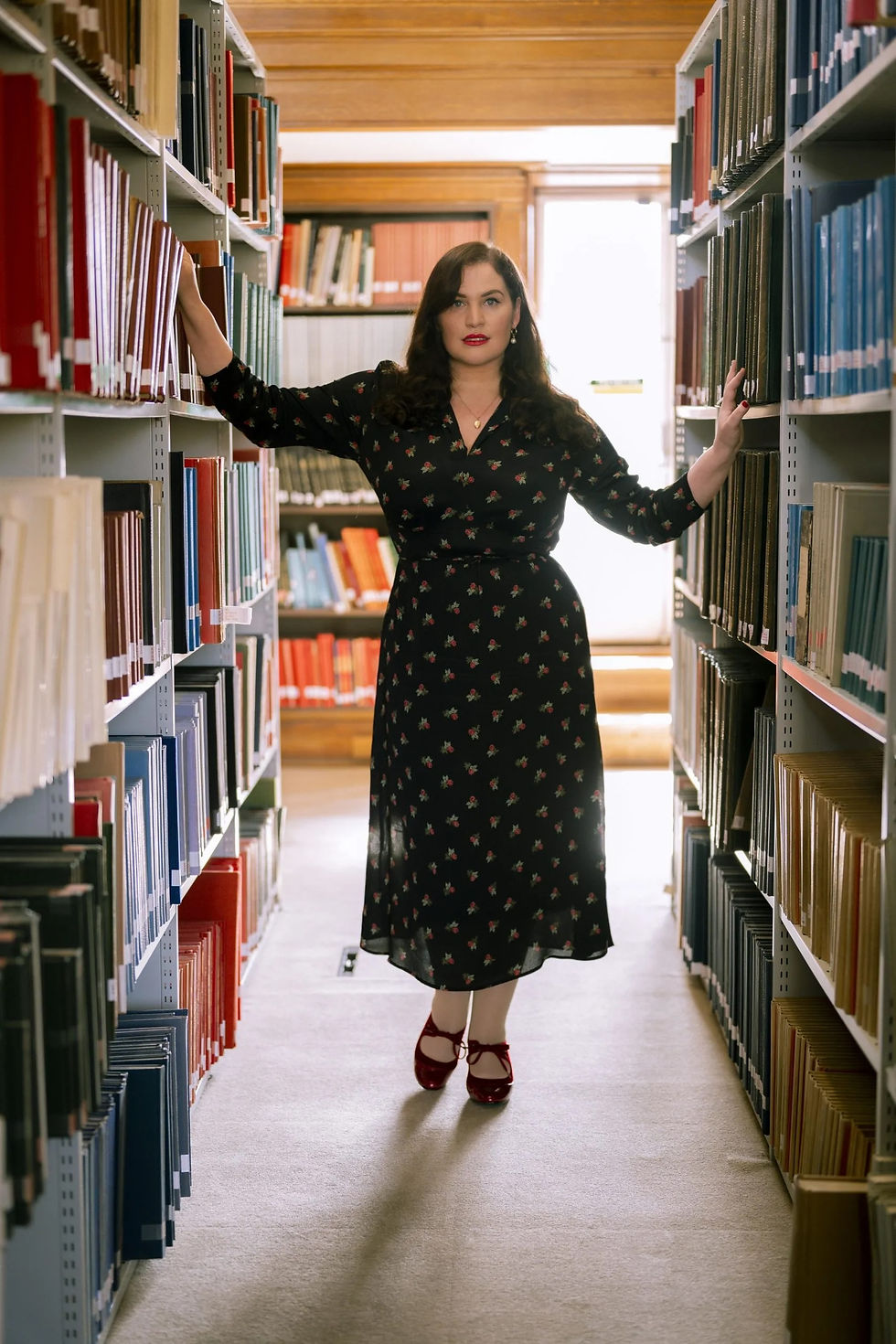
Editor's Note: At She Comes With Baggage Media, we believe stories have the power to change lives. Sometimes they remind us that we're not alone. Sometimes they challenge us to see the world differently, and sometimes they become the proof someone else needs to believe that they belong. For so many queer people, representation is about discovering that there are others who have walked a similar path and come out the other side with joy, hope, and a life they never thought was possible. That is why this conversation with Roxy Bourdillon matters. Her work has spent years creating space for queer women and gender-diverse people to see themselves not as side characters, but as the authors of their own stories. Through journalism, editing, and now memoir, she has helped preserve the experiences of an entire community while reminding us that our stories deserve to be told exactly as they are.
Before Roxy Bourdillon became the Editor-in-Chief of DIVA magazine, before she wrote for publications like Cosmopolitan, Glamour, and Marie Claire, and before she published her memoir What A Girl Wants, she was simply a young girl from Leeds who loved stories. She made homemade magazines, filled notebooks with diary entries, and spent countless hours imagining what it might be like to become a writer one day. Like so many creative people, that dream felt exciting, but it also felt impossibly far away.
Looking back now, it's almost poetic that someone who once questioned if there was space for her voice would go on to become one of the most recognizable voices telling queer women's stories today. Her career has become so much bigger than writing articles. It has become an act of preserving history, creating representation, and making sure future generations have something many of us searched for growing up: proof that we are not alone.
Growing up in Yorkshire wasn't always easy for Roxy. She remembers feeling like she was the only lesbian in town, carrying fears and questions that so many queer people know all too well. It wasn't until years later, after coming out, that she learned her home county had once been home to Anne Lister, often referred to as the first modern lesbian. Discovering that piece of history changed something inside her. The place that had once felt isolating suddenly carried a legacy of queer love and resilience that stretched back more than a century.

Like many people in the LGBTQIA+ community, Roxy's journey toward embracing her identity wasn't a straight path. It was shaped by fear, anxiety, shame, and the quiet loneliness that can come from believing you're different in a world that often asks you to hide those differences. Instead of allowing those experiences to define her, she transformed them into purpose. Today, every story she tells is with the foundation of hope that someone else won't have to carry those same feelings alone.
"I don't want others to feel that agony and isolation," she told us. "In a world that still others and shames us, I want to create work that makes queer folks feel seen, validated, entertained and not just accepted, but embraced exactly as they are."
That mission became even more meaningful when she joined DIVA magazine, a publication that had once quietly become a lifeline for her. Long before she ever worked there, she was a reader. While she was still in the closet, she read every issue in secret, absorbing each page because it offered something she desperately needed at the time. It showed her that there were other women like her living full, joyful, authentic lives.
"Suddenly I had this visceral proof of the existence of others like me, a portal to a whole new super gay world that was vibrant, alive and real."
As she shared that memory with me, I couldn't help but think about how many people have experienced that same moment. We often underestimate what representation can do until we're the person who desperately needs it. Sometimes seeing someone else's story gives us permission to begin writing our own.
Now, years later, readers tell Roxy that DIVA has become that same source of hope for them. It's a full-circle moment that beautifully captures why representation matters. The magazine that once helped her discover herself has become a place where she helps countless others do the same.
Throughout her career, Roxy has remained committed to telling stories that center queer women because she understands what happens when those stories are missing. Historically, queer women have been overlooked, erased, or reduced to stereotypes, leaving many people feeling invisible within media that rarely reflected their lives. She knows firsthand that stories have the ability to change someone's understanding of themselves, and sometimes even save a life.

Writing her memoir, What A Girl Wants, became another chapter in that journey. Revisiting her own life meant confronting memories she hadn't looked at in years, and in doing so she realized just how much of her story had been shaped by shame.
"Writing my memoir reminded me exactly how much of my life I have spent hating myself," she said. "I could see very clearly on the page that I'd spent so many chapters of my life utterly drenched in shame."
It's an incredibly vulnerable realization, but what struck me most wasn't the sadness behind those words. It was what came next. Rather than staying in that place, she made the decision to stop carrying that shame forward and instead use her experiences to help others heal. That feels like the heart of Roxy's work. She doesn't write because she has all the answers. She writes because she knows what it feels like to need them.
One of the things I admire most about her storytelling is that it never ignores life's difficult moments, but it also refuses to let those moments have the final word. Humor is woven throughout her work, not because it minimizes hardship, but because it reminds us that laughter and healing can exist in the same space.
"I've been through tough times navigating sexuality, rejection, failure, shame, grief, body image, financial difficulty, mental health and more," she shared. "In spite, or perhaps because of all that, I strive to tell stories with humour, warmth and empathy."
That philosophy extends beyond her own writing and into the way she edits the stories of others. Whether she's working on a deeply personal memoir or publishing someone's experience through DIVA, compassion is always at the center. She believes honesty doesn't require cruelty, and vulnerability should never come at the expense of someone else's dignity.
When we talked about representation in media today, Roxy's answer felt refreshingly simple. Authentic representation isn't about checking a diversity box or telling one version of the queer experience. It's about making room for the incredible diversity that has always existed within our community.
"Our identities aren't a box to be ticked," she said. "There are an infinite number of queer stories."
That perspective feels especially important right now because while progress has certainly been made, so many people still don't see themselves reflected in the stories being told. Queer women, trans people, non-binary individuals, disabled members of our community, and queer people of color continue to be underserved in media. Roxy believes the answer isn't choosing which stories deserve space. The answer is creating more space altogether.
As our conversation came to a close, I asked what she would say to someone who is still navigating their own journey of self-discovery. Her answer was one I hope every reader carries with them.
"You have no control over how other people will react, so focus instead on nurturing your relationship with yourself. Find the people, places and things that make you feel good about who you are. Craft a life that is bolstered by community, connection and creativity. Your identity is not the problem. If people try to make you feel that way, they are the ones who have the problem. You are valid and worthy and gorgeous, just as you are." - Roxy
Those words beautifully capture everything Roxy has dedicated her career to creating. Every article she writes, every magazine she edits, and every page she publishes becomes another reminder that queer lives deserve to be documented, celebrated, and remembered. Years from now, someone will pick up one of those magazines or books and find exactly what Roxy once found herself: proof that they are not alone.
Looking ahead, she hopes the next generation of queer storytellers won't spend years wondering whether anyone wants to hear what they have to say. She hopes they'll feel empowered to create boldly, speak honestly, and trust that their voices matter.
"I worried that nobody would care what some random lezza from Leeds had to say," she laughed. "Now, I want the next generation of queer storytellers to feel empowered to share their creativity with the world without apology. Your story is worth being told."
I couldn't think of a better reminder to end on because that's exactly what She Comes With Baggage Media has always believed. Every person carries a story. Every story carries the power to make someone else feel seen. And every time we choose to share those stories with honesty, compassion, and courage, we leave the world a little more connected than we found it.
Follow Roxy's Journey:
🌈 Looking for more LGBTQ+ Stories? Follow us below:
Follow She Comes With Baggage Media:
Instagram: @scwbmedia
Follow She Comes With Baggage Podcast:
Instagram: @scwbpodcast


Comments